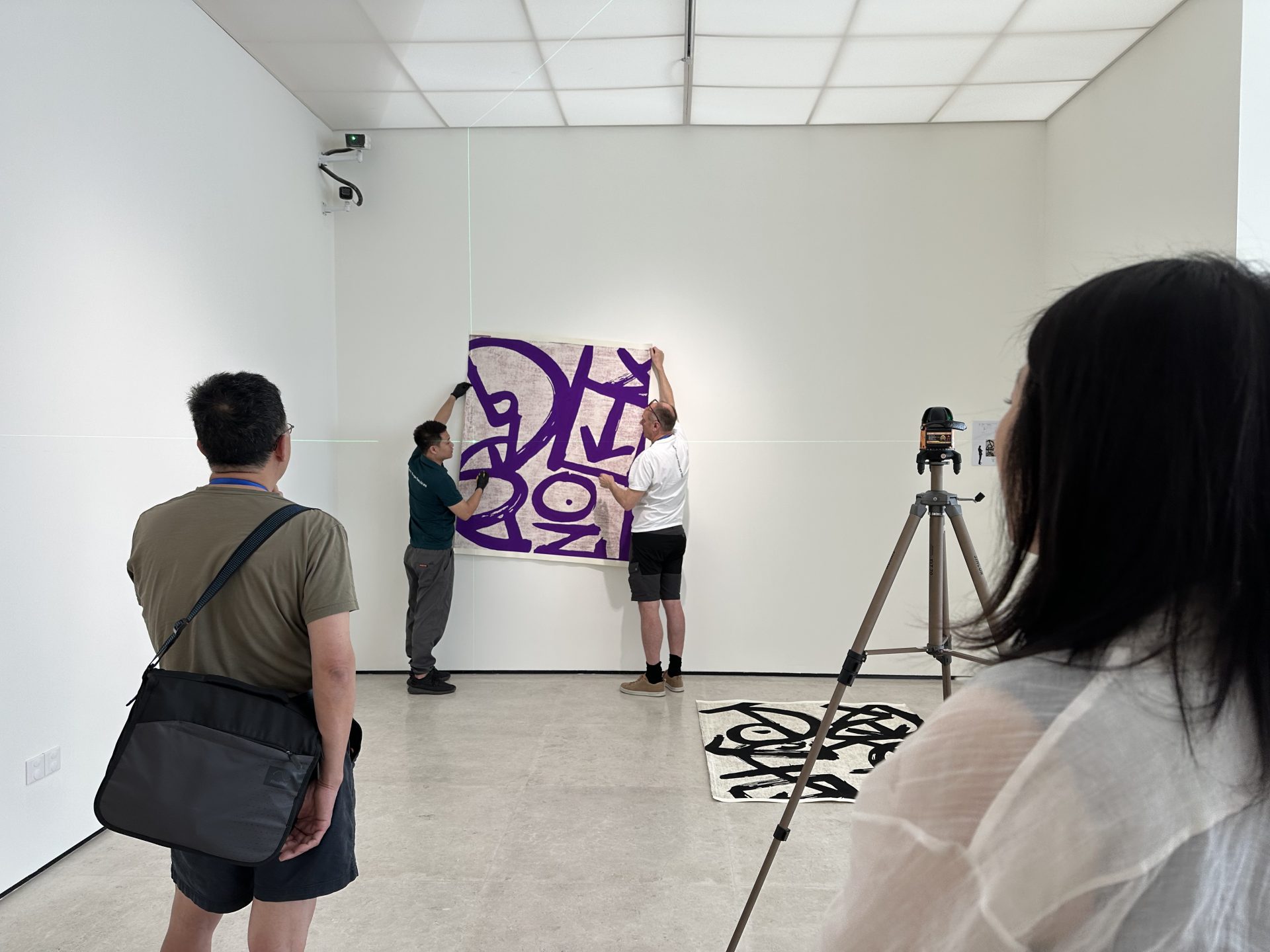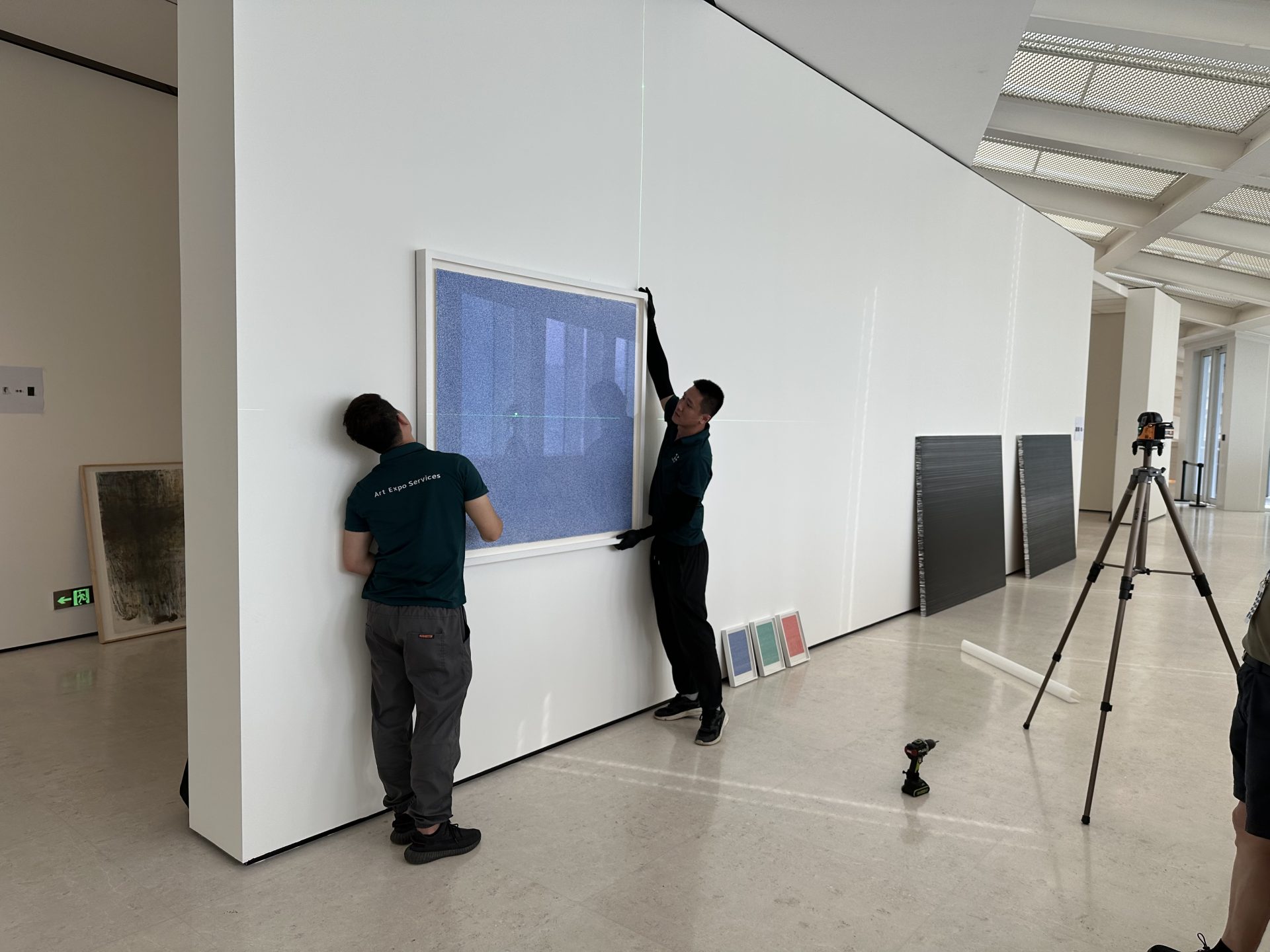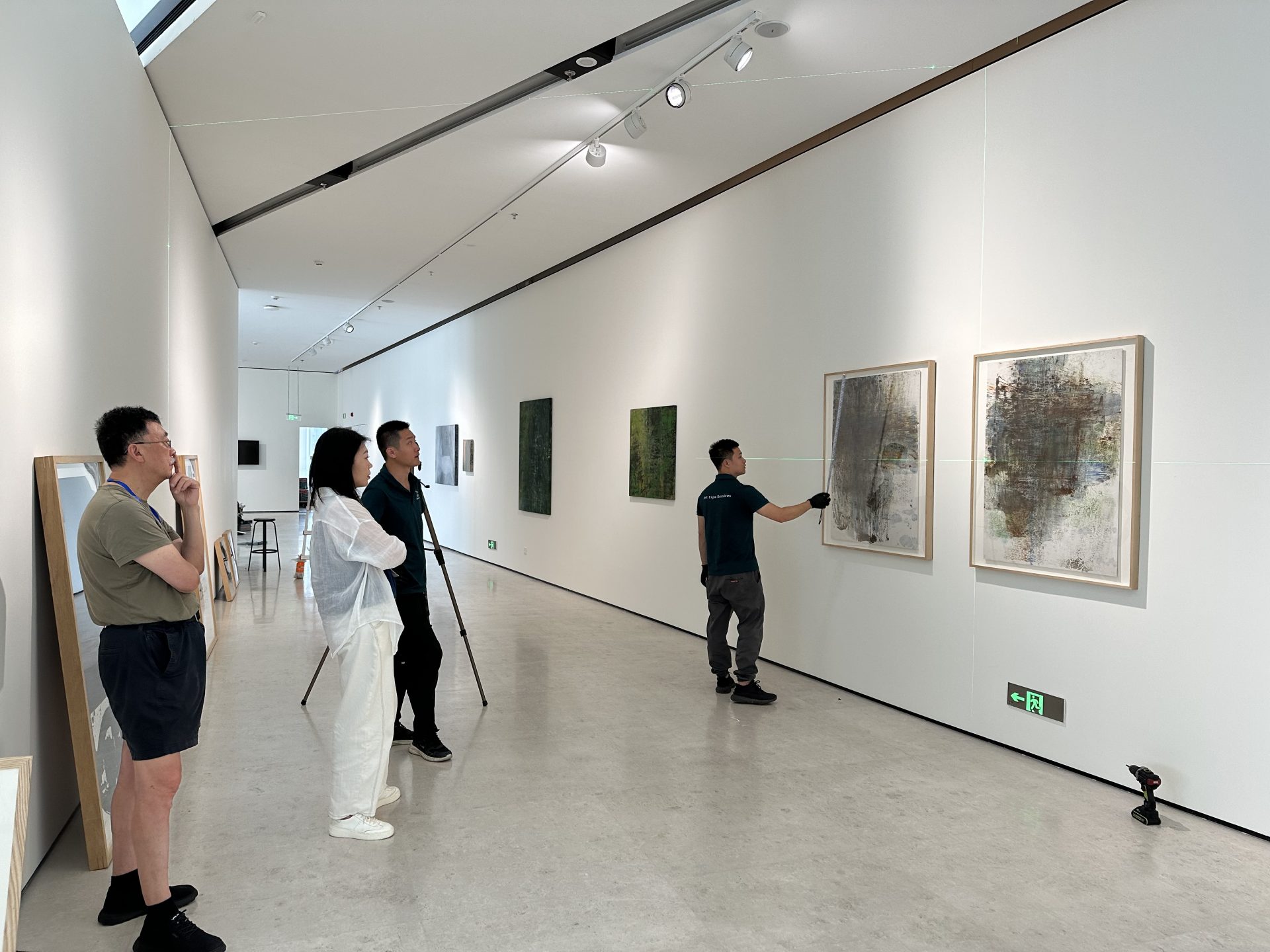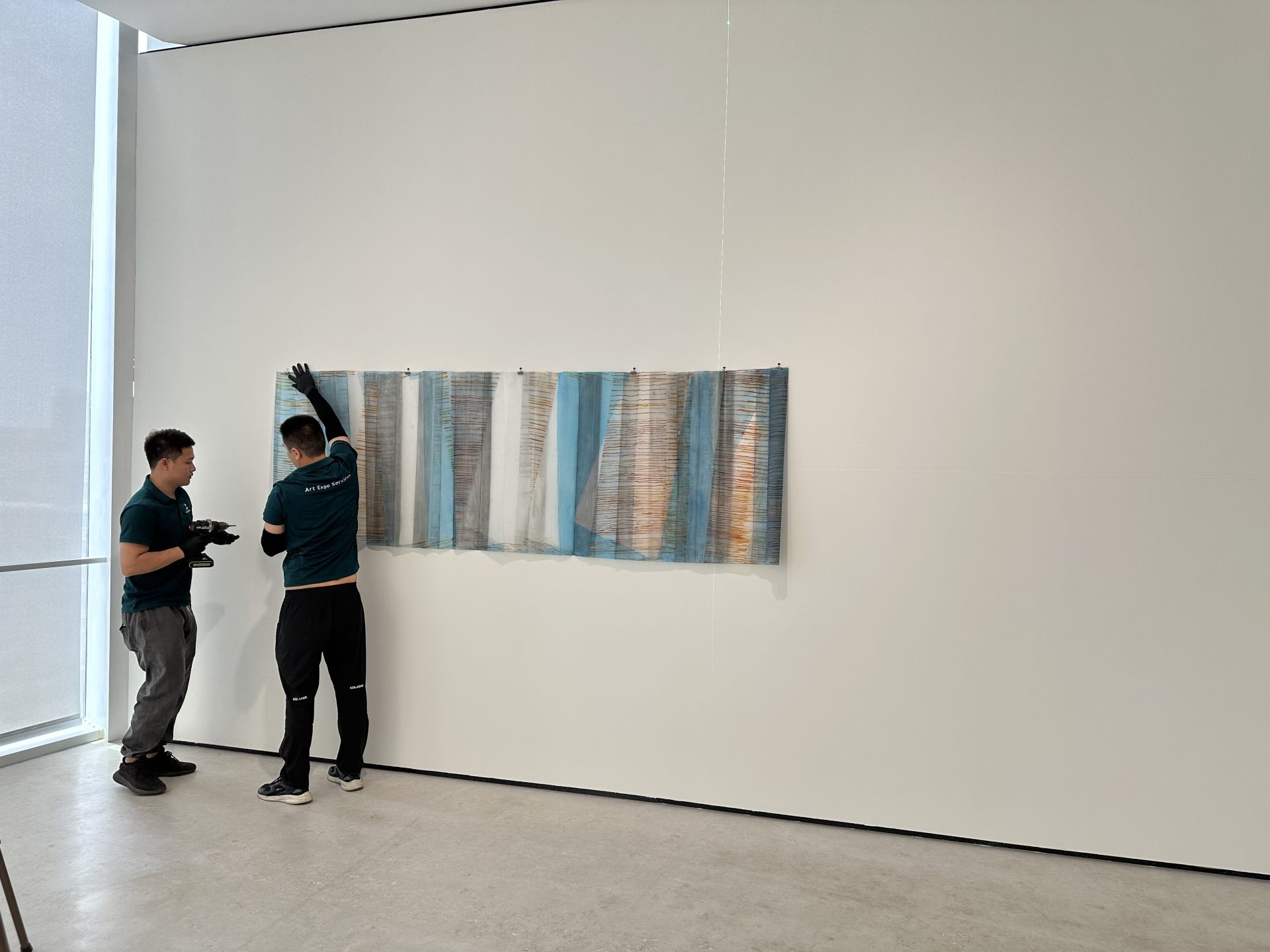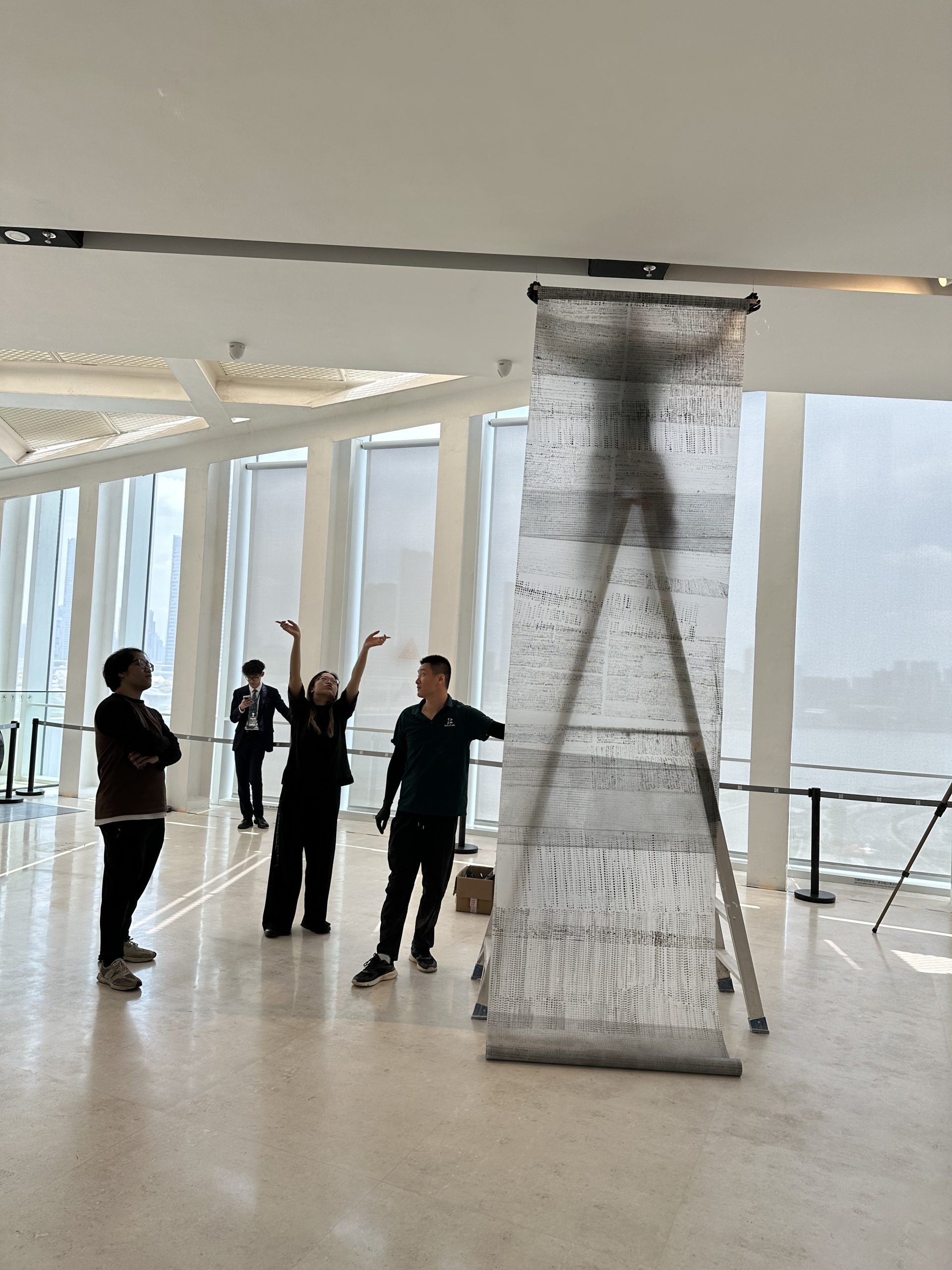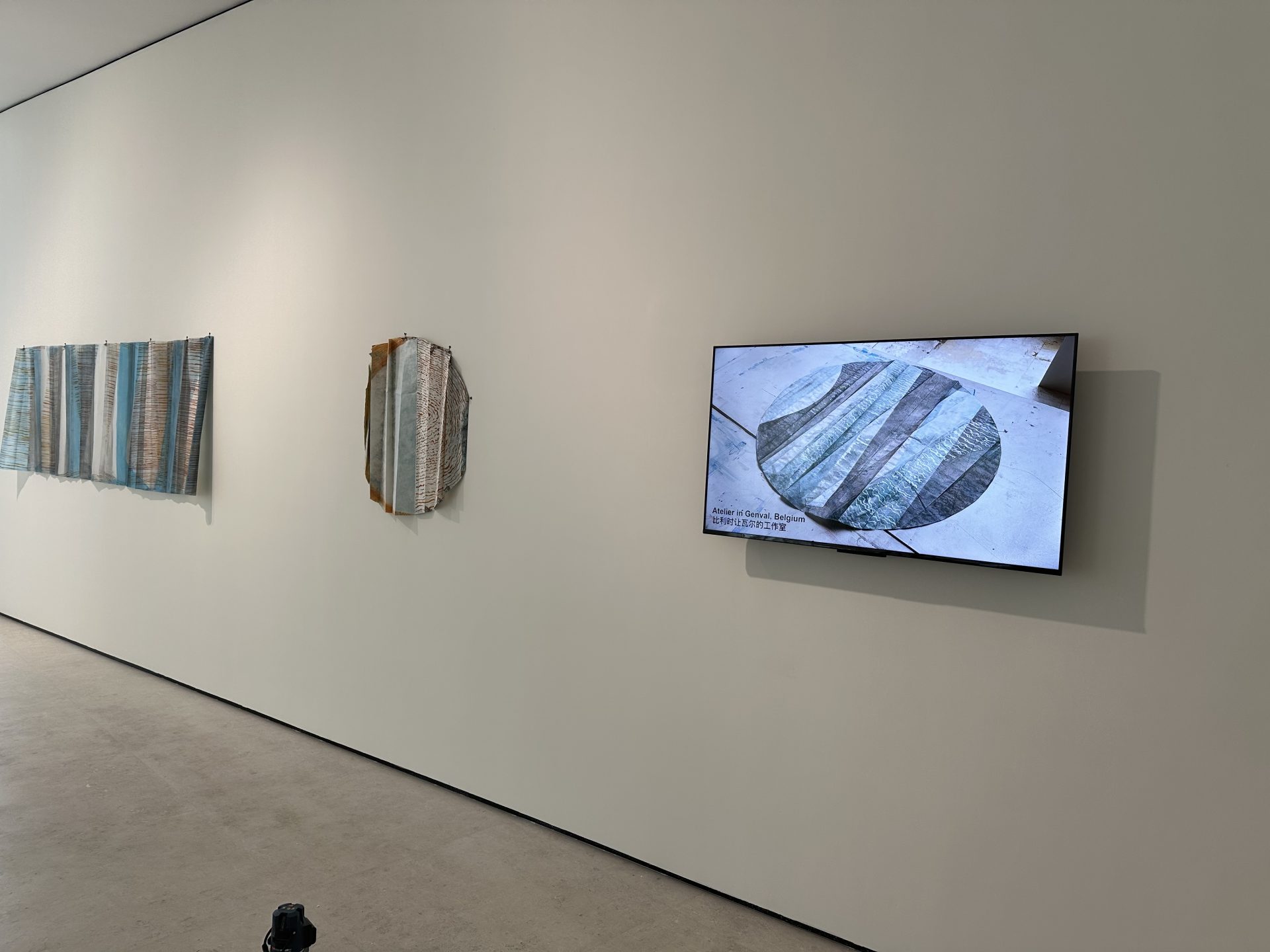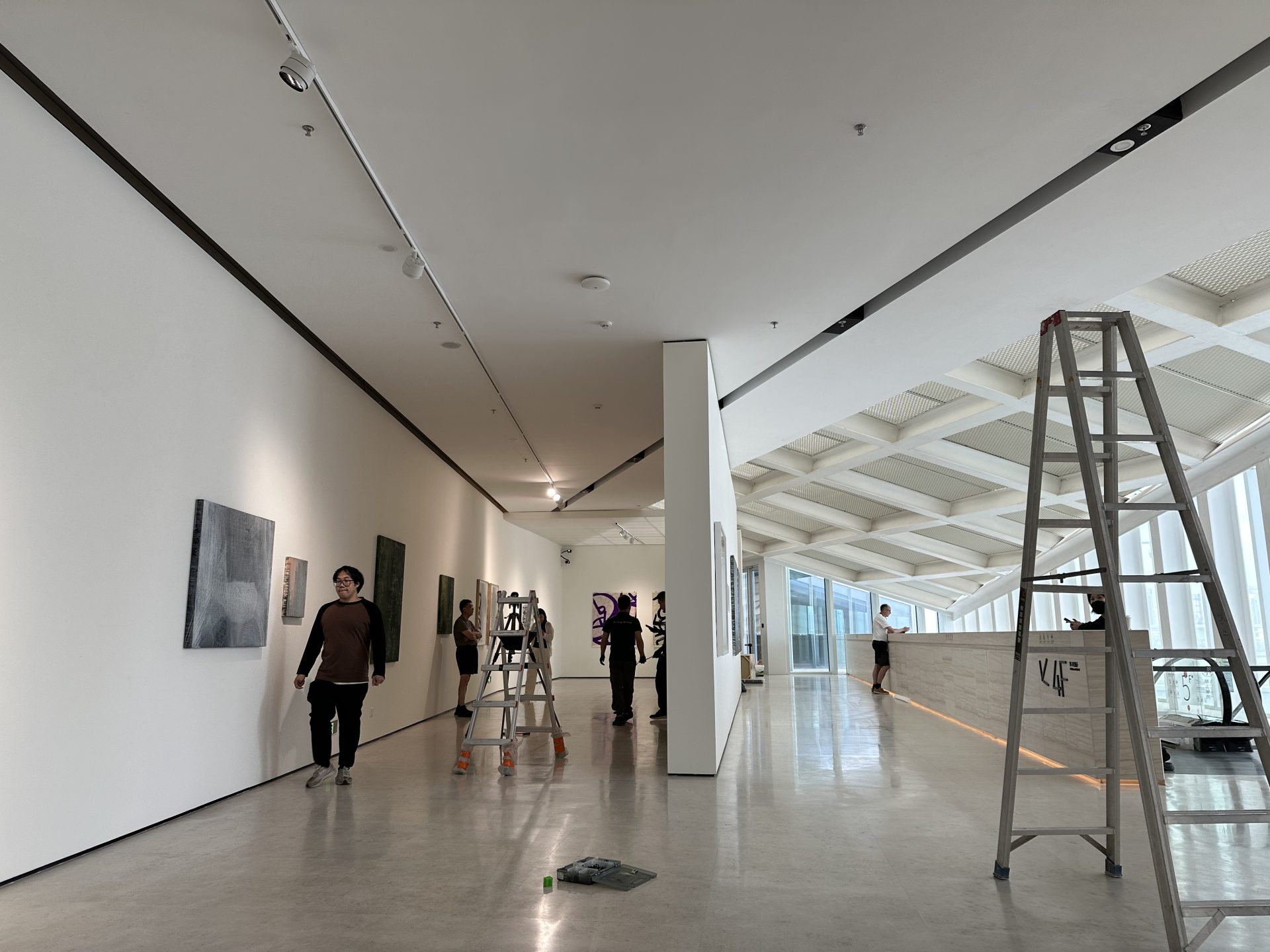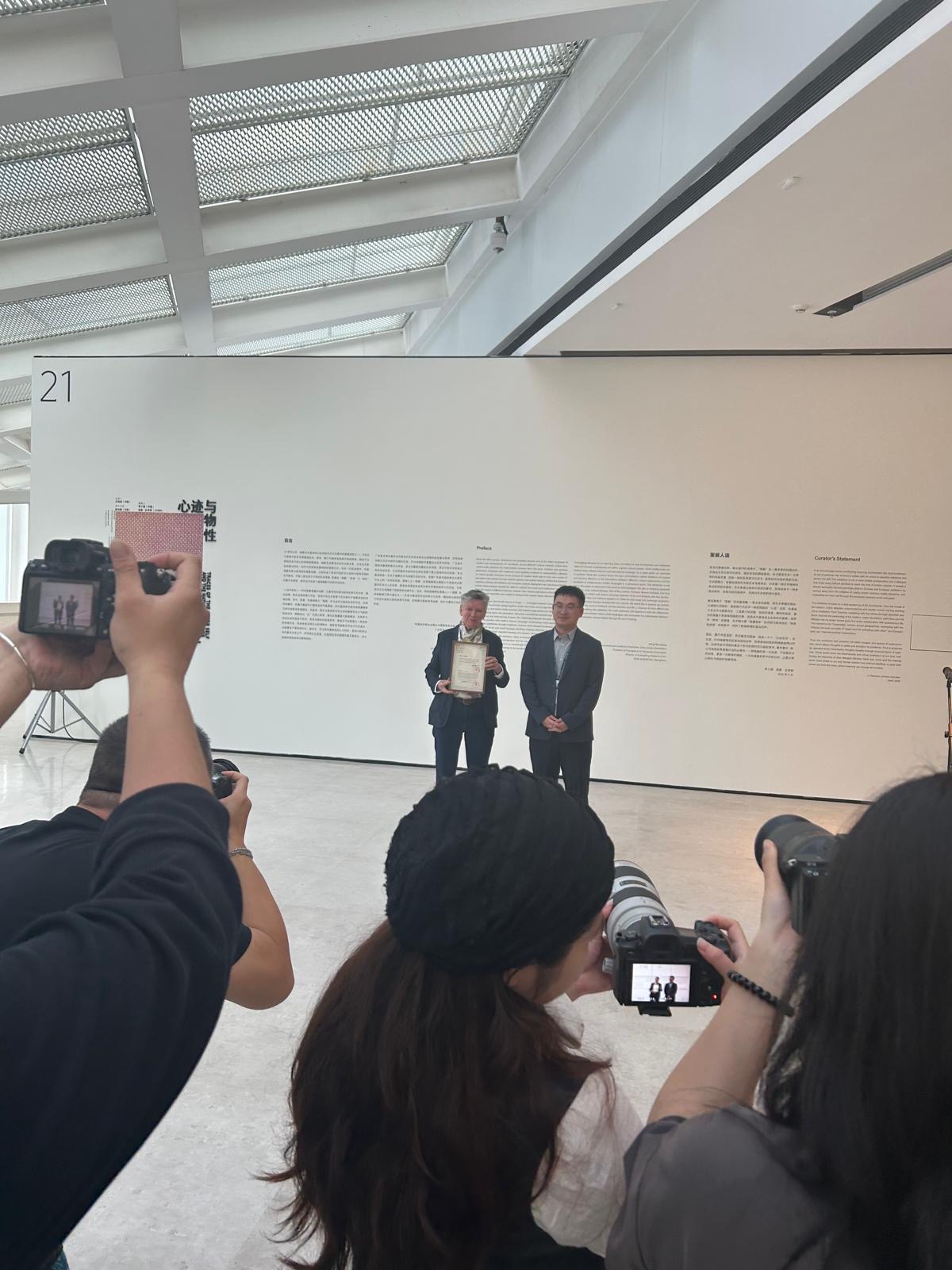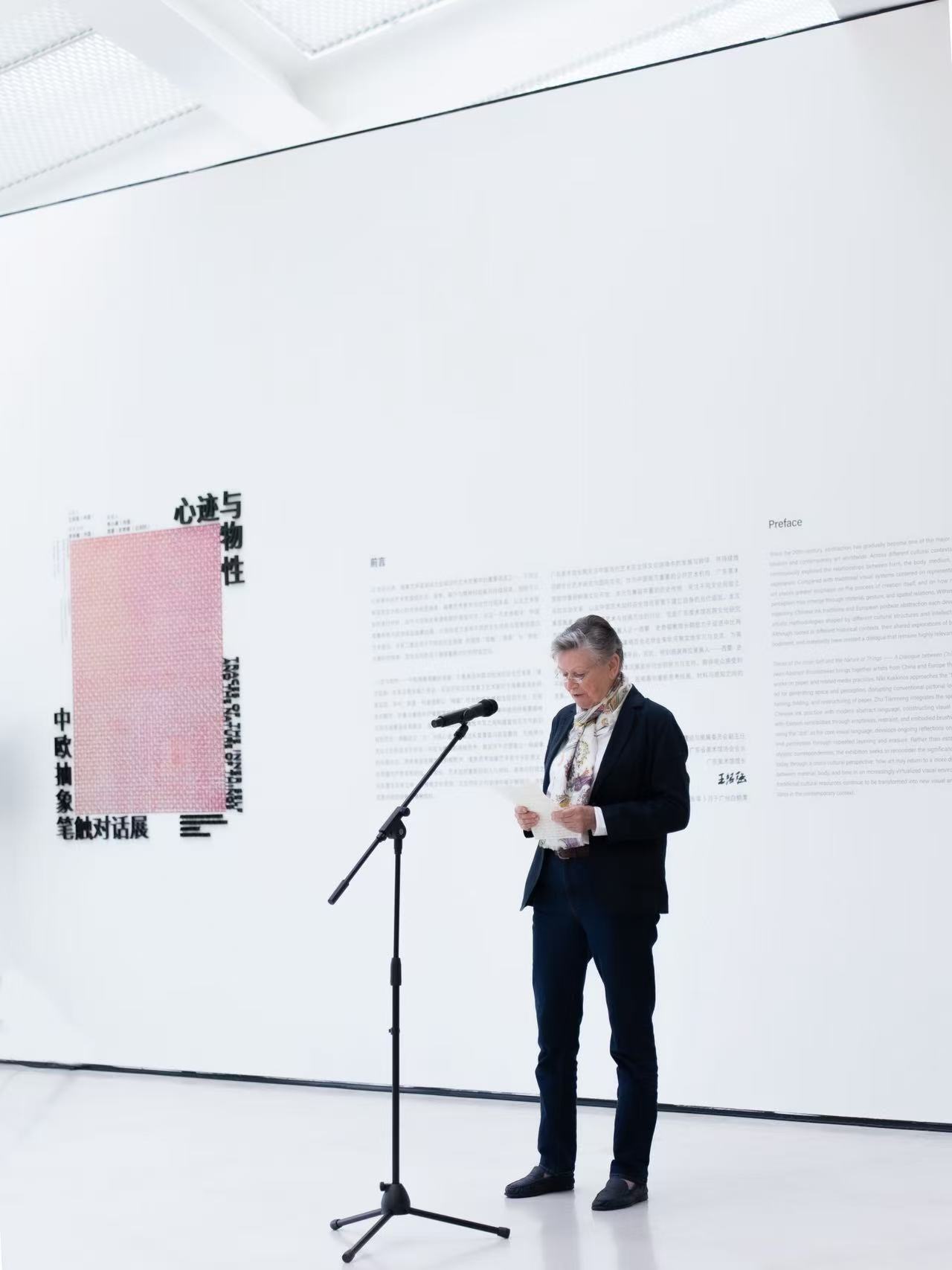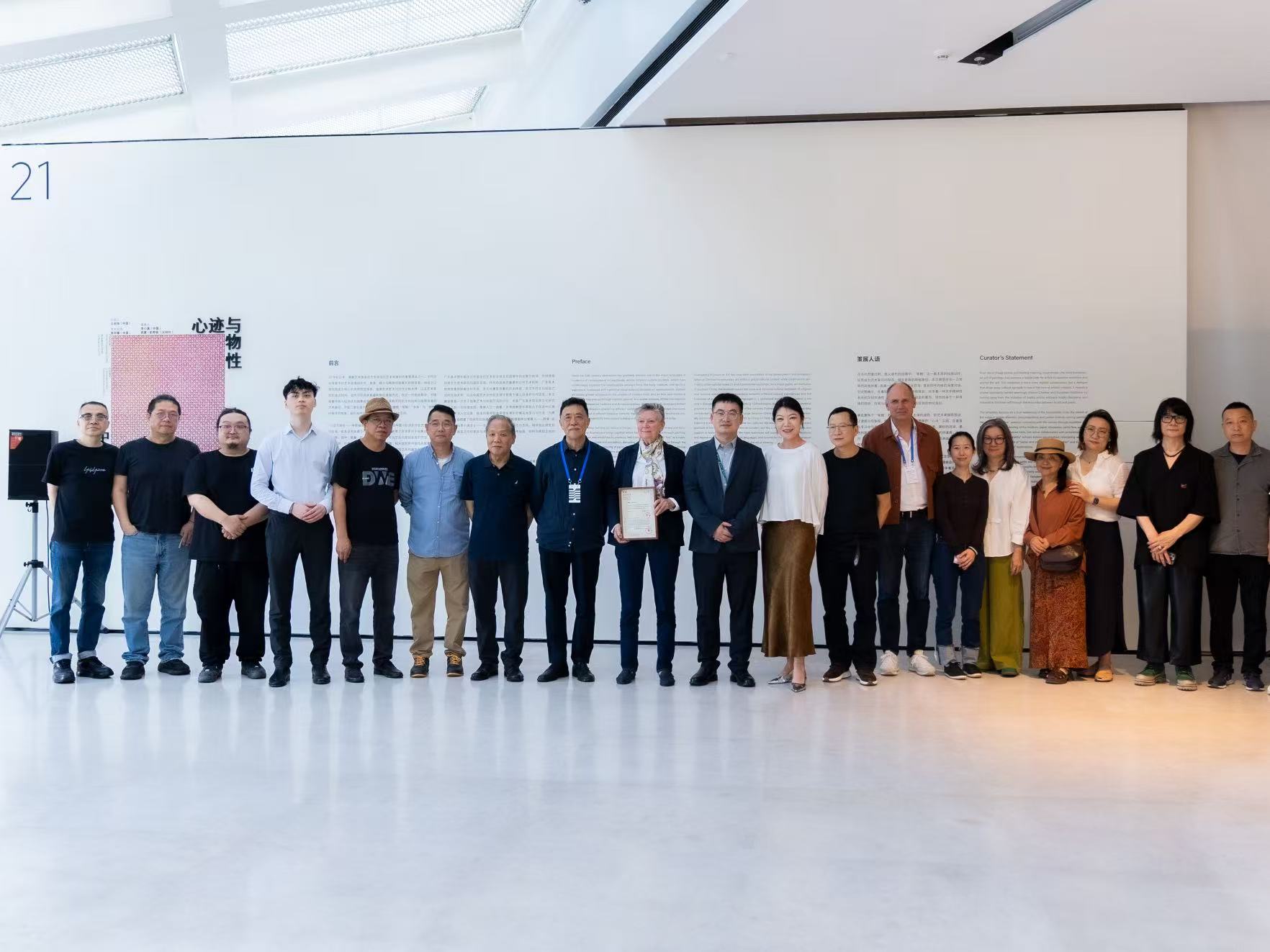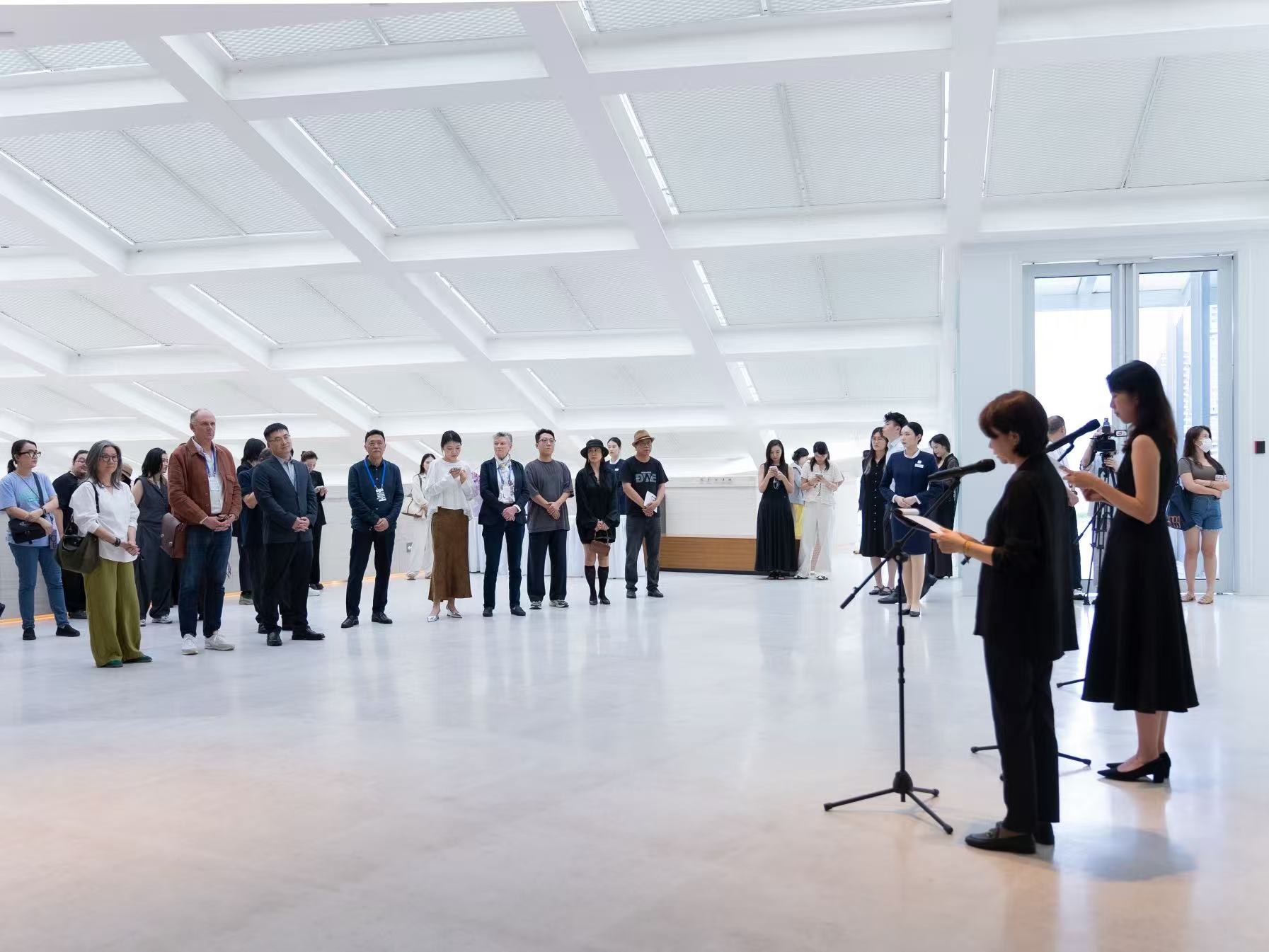
OPENING
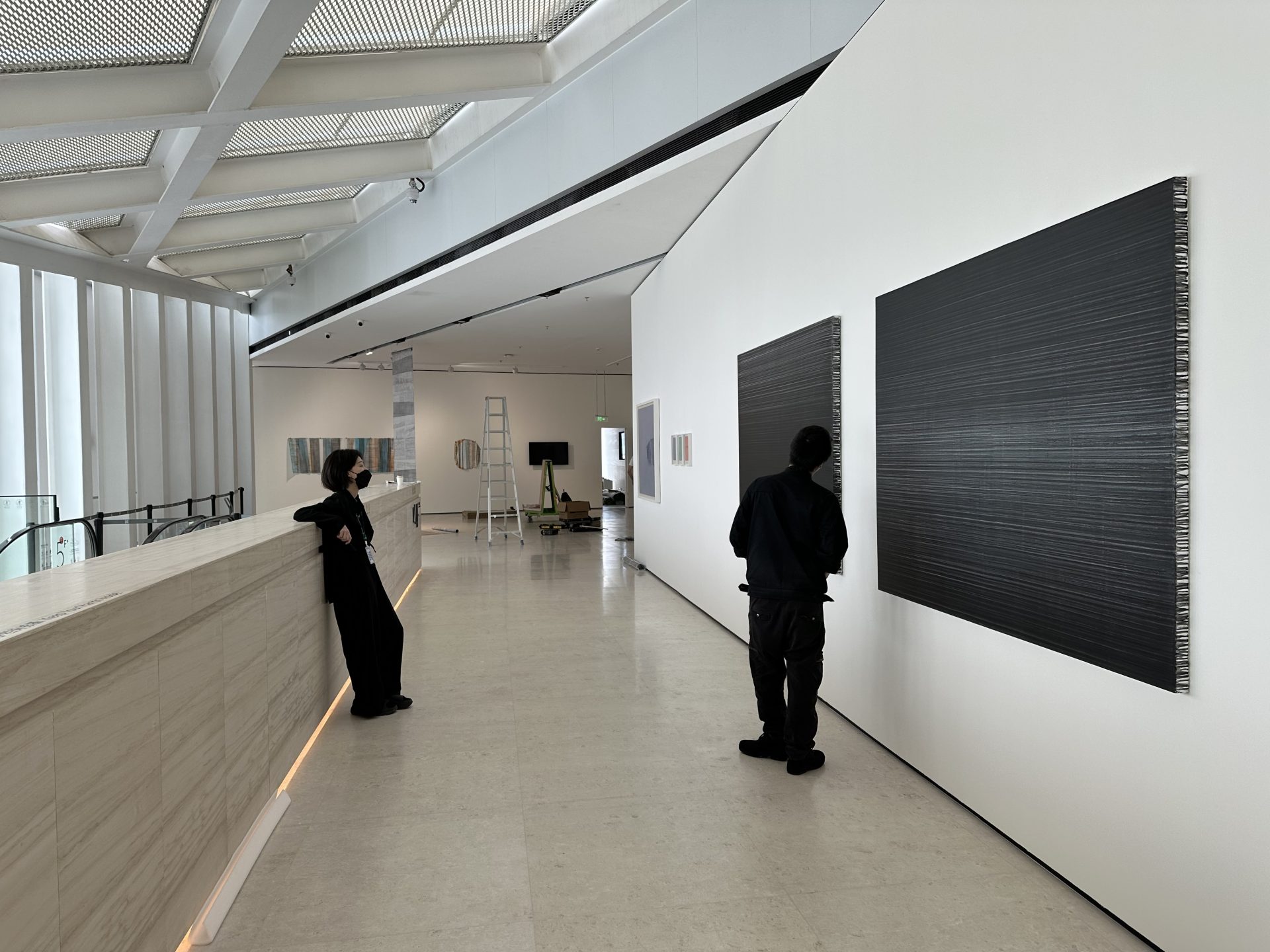
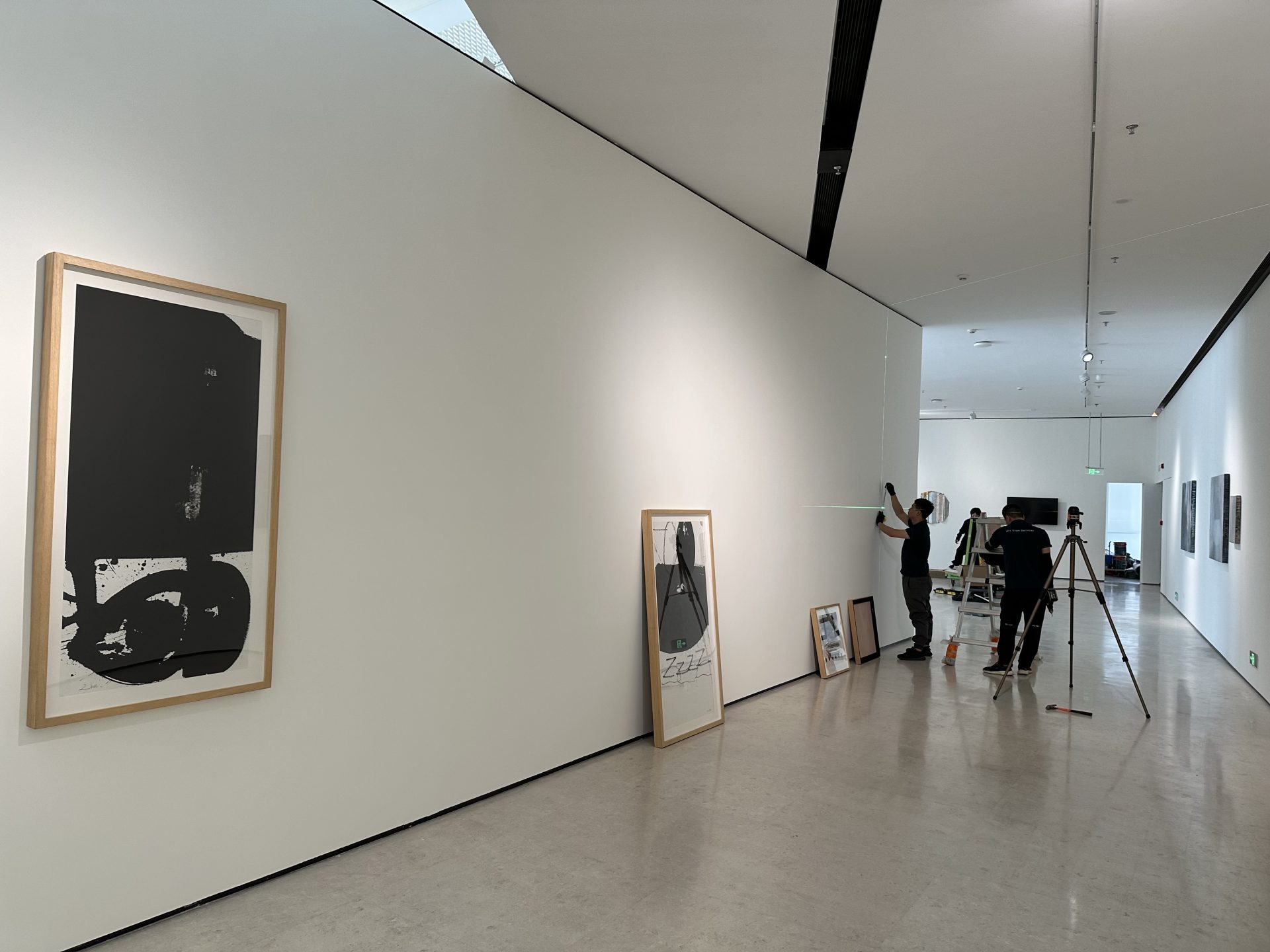
FINISHING
L’abstraction partagée
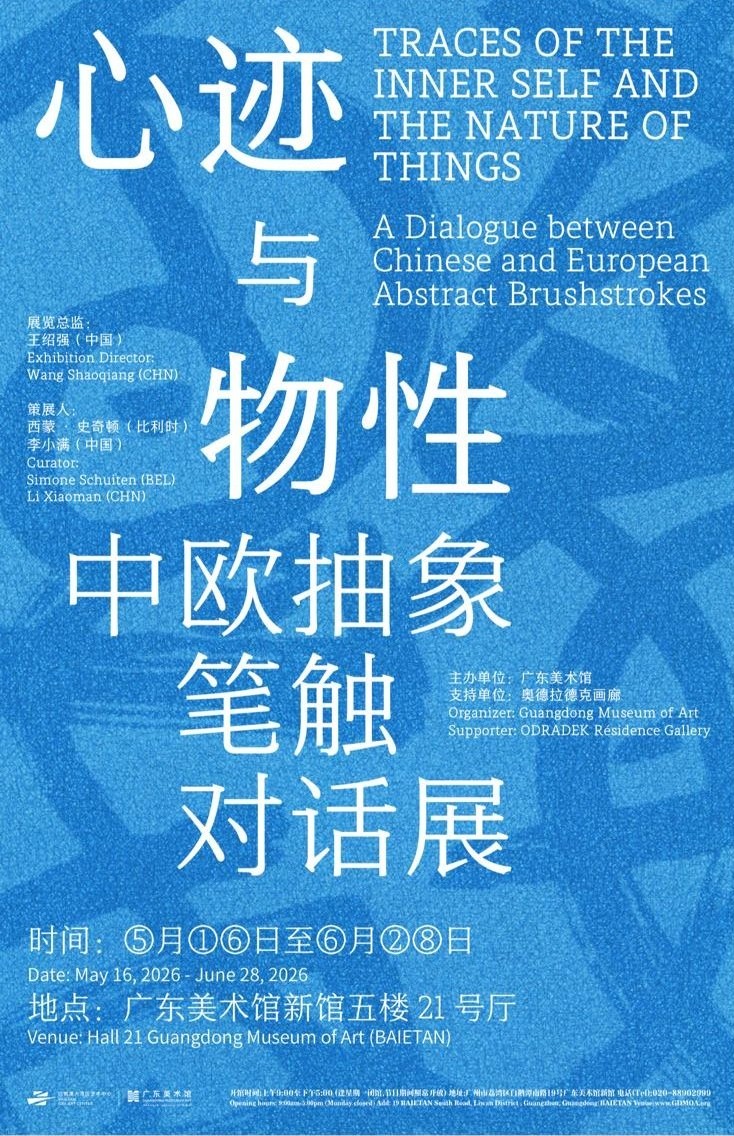
For nearly twelve years, ODRADEK has maintained close ties with Chinese artists through its residency programme.
For us, this represents an ongoing intercultural dialogue that enables the development of aesthetic perspectives on our different relationships with the environments we inhabit. Reflecting together, sharing studio spaces, and collaborating on the organisation of exhibitions allow us to broaden the scope of our activities, both theoretical and practical.
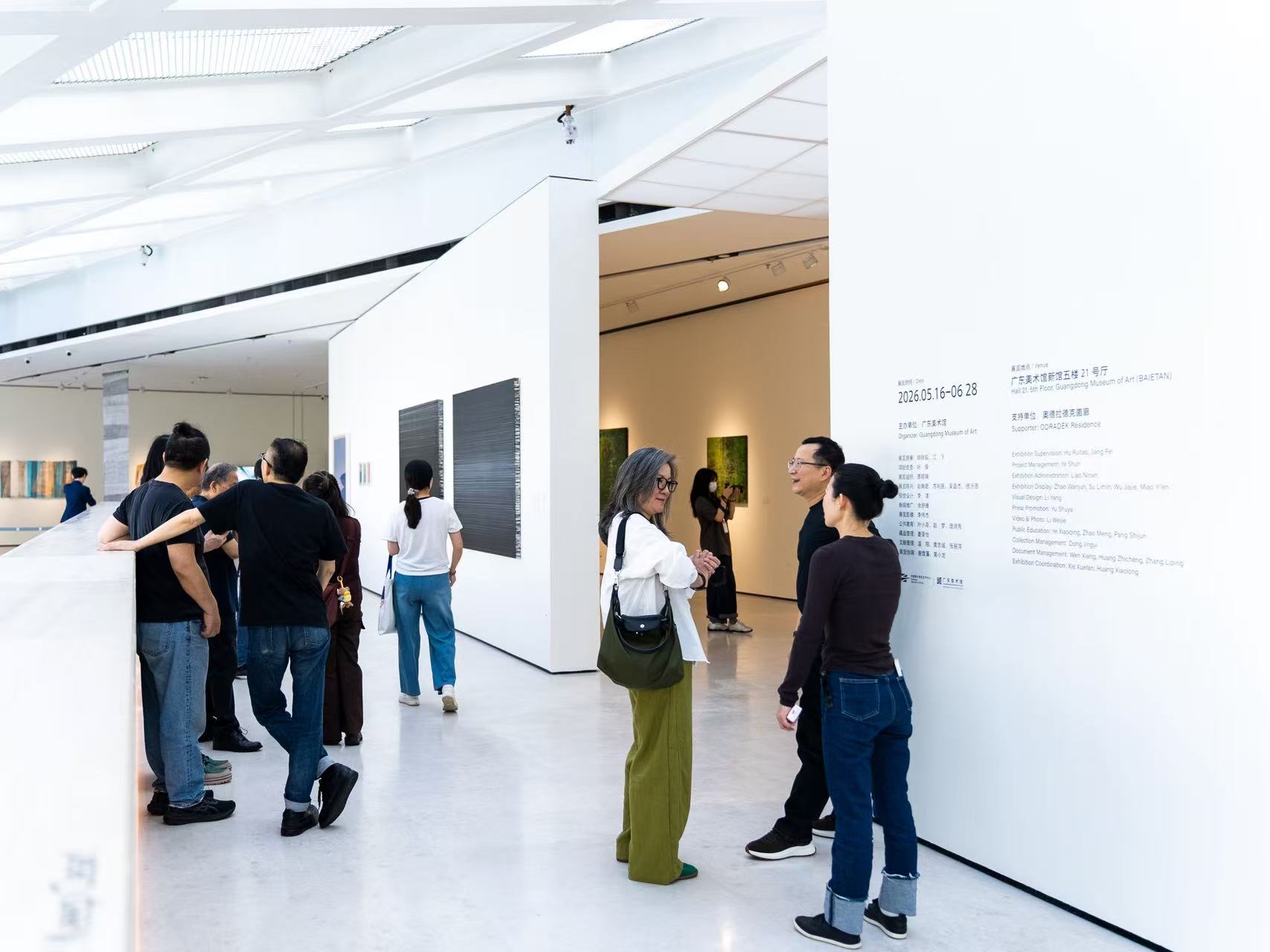
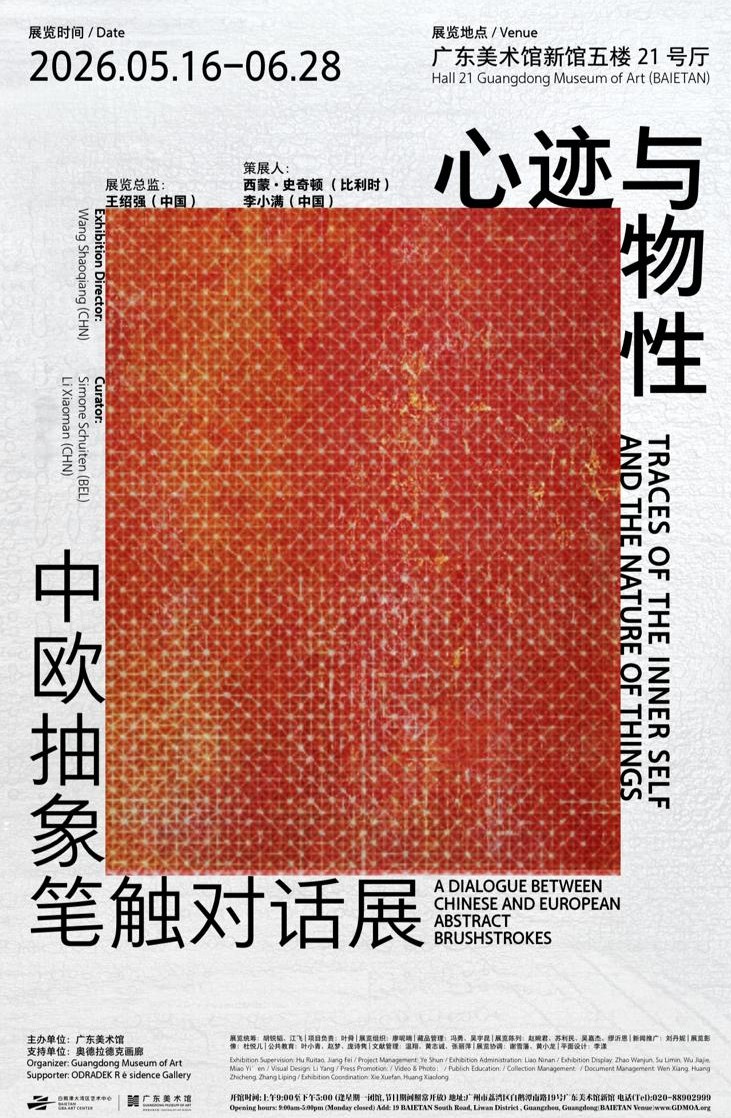
The Guangzhou Museum offers us the opportunity to further this dialogue through an encounter between contemporary artists and their Chinese and European predecessors. We are particularly interested in the art of the line, as it was around this very subject that significant exchanges took place at a pivotal moment in our shared histories.
We may conclude that Chinese and Western artists have influenced one another since at least the beginning of the twentieth century, and that the convergences between their respective aesthetic traditions have become increasingly significant over time. This mutually enriching exchange has undoubtedly contributed to dismantling barriers and stereotypes concerning the other.
It is now up to us to continue and deepen this reciprocal contribution.
Ulla Hase乌拉・哈泽
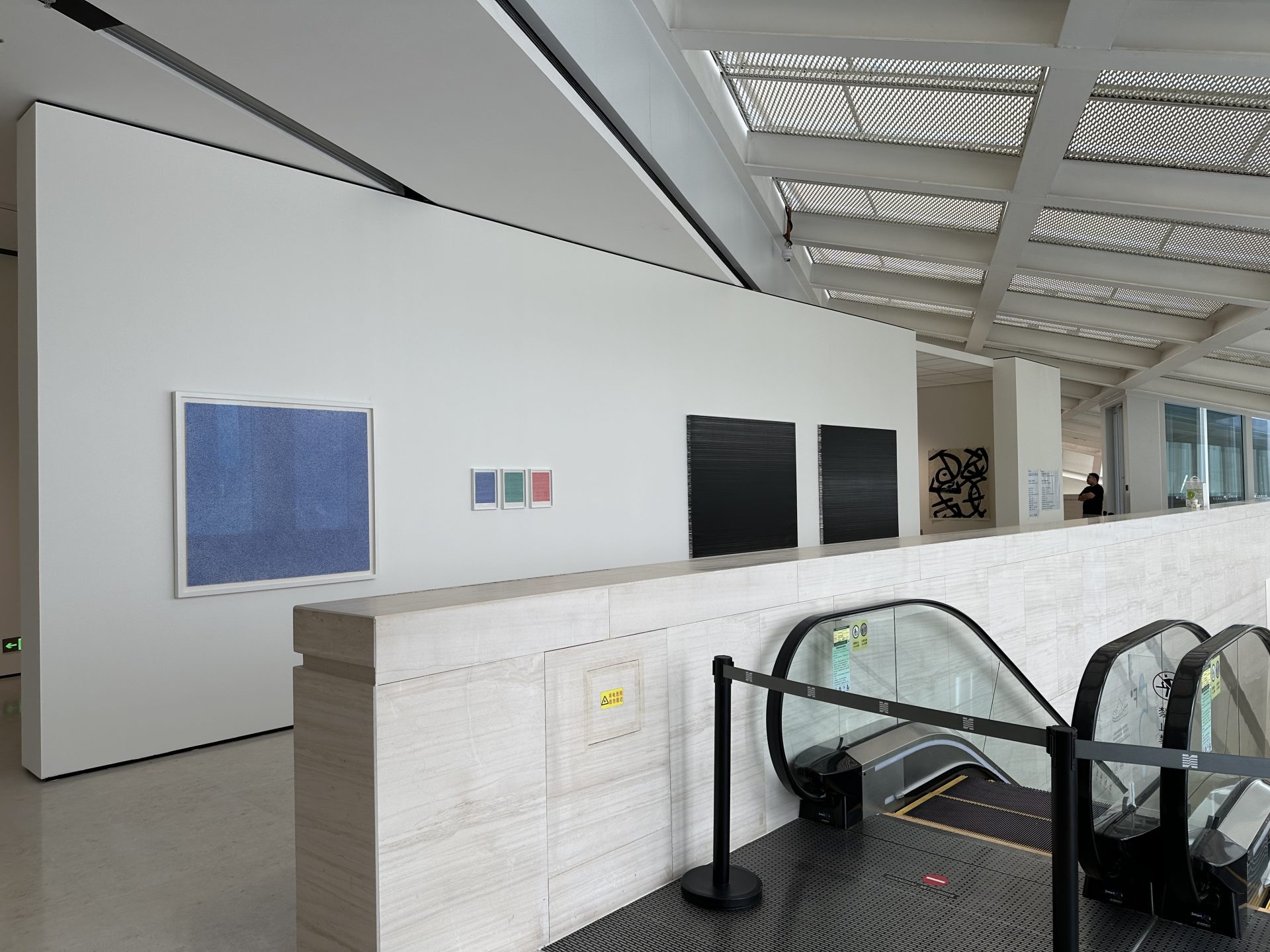
Ulla Hase, with a background in applied arts and graphic research, has studied painting, illustration and typography. It took her a long time to break free from the constraint of having to endow images with meaning. The absolute coordination of mind, body and breath is the key to the unfolding of Ulla’s works. The walking metaphor she refers to also corresponds to a journey in her paintings—a journey with a beginning and an end, without a center, hierarchy or dominant motif, only the natural distribution of dots, lines, overlays and intersections.
Ulla Hase’s creation inherits the artistic lineage of Josef and Annie Albers, and also engages in a dialogue with the works of artists such as Agnes Martin and Julie Mehretu. While drawing on the creative language of her predecessors, she always maintains a distinct personal expression. In an era pursuing spectacle and immediacy, Hase adopts “slowness” and “repetition” as her artistic attitude, exploring deep complexity through simple actions and leaving a silent space for the unspeakable. With lines as traces, she constructs a visual poetics that directly touches the senses on paper, inviting viewers to enter a blue universe full of vibrations and thoughts.
Niki Kokkinos 尼基・科基诺斯
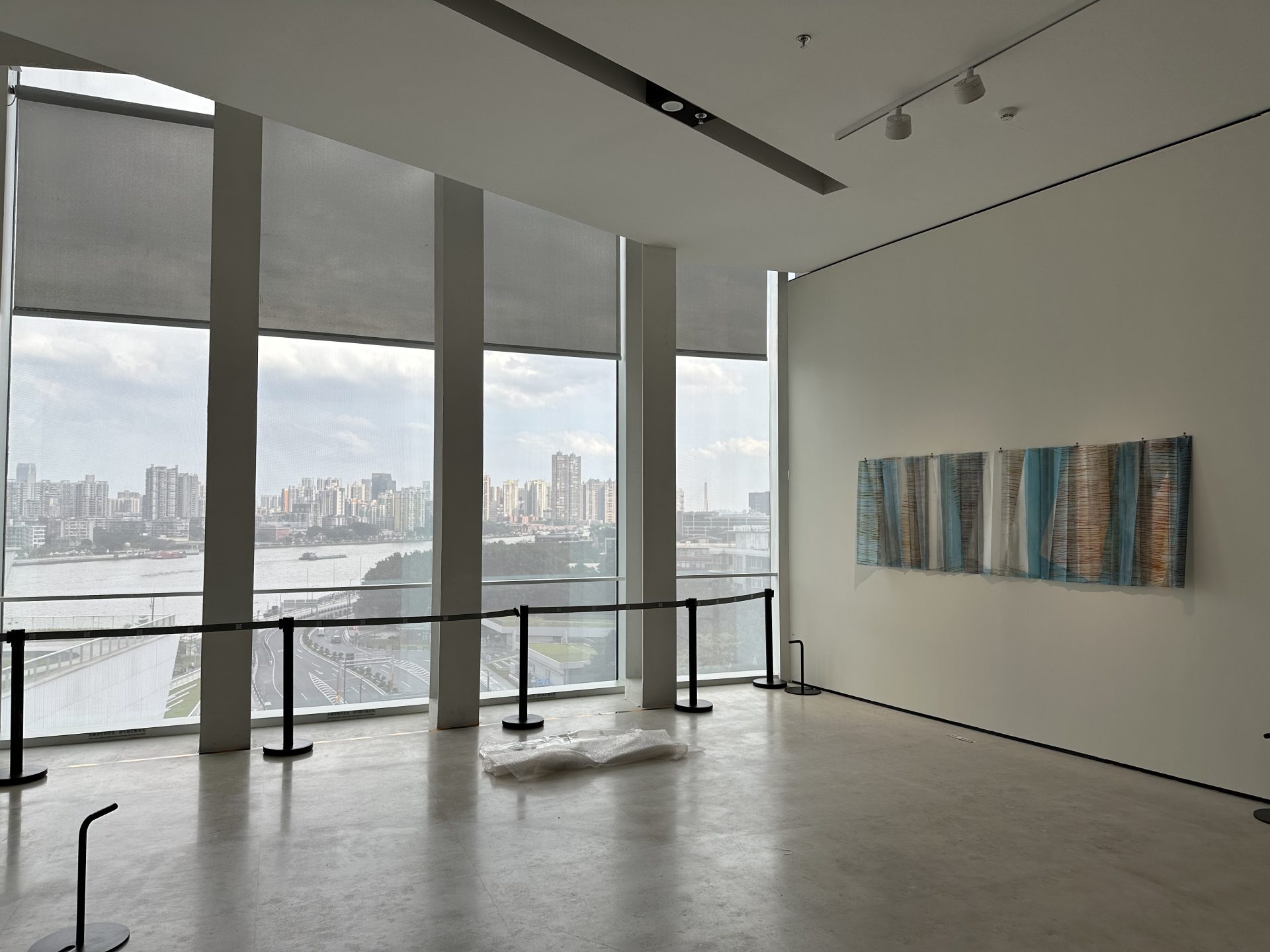
Niki carries out artistic creation starting from the possibility of “folds”, which in fact practices the philosophical action elaborated by Deleuze in his works on Leibniz. Confronting the proposition of time and space directly, the artist manipulates those surfaces that undergo distortion, reversal and subversion in the process of turning inside out—in short, the logic of these planes is completely broken. After the dissolution of the center, the artist forces the rigidity of the paper to yield, integrating the edges into the interior of the work, making both the front and back sides readable. In every fold, we can perceive that some kind of event is accumulating momentum, waiting for reordering when unfolded next time. These transboundary trajectories and folding operations together realize and reveal unprecedented movement paths, enabling interaction between originally separated or opposing fields.
Each work is a witness to a journey already completed: the artist steps out of the known territory, deviates from the linear and predetermined trajectory, and like Odysseus and her Greek ancestors, leaves the hometown island and heads for the vast and unknown world.
She always remembers the verses of the poet Cavafy:
When you set out for Ithaca,
hope the journey is long,
full of adventures, full of discoveries……
— Constantine Cavafy, “Ithaca”
彭玫玲 Peng Meiling
Peng Meiling’s creation is built on synaesthesia: inspired by composer Olivier Messiaen, she “hears sounds with her eyes”, integrating the ethereal essence of nature with the chants of the human heart. With calligraphic brushstrokes and ethereal colors, she reinterprets landscapes—not as scenery, but as the sacred unity between humans and the universe.
Her works engage in a dialogue between Western art and her own Chinese roots, integrating ancient rituals with vivid modernity. Xi Murong commented: “In Meiling’s paintings, all directions of thinking are oriented toward the inner essence of life—it is a pursuit, a climb, and an endless introspection, which, as she herself puts it, is a contemplative creation.”
祝天猛 Zhu Tianmeng
Since the 1980s, he has carried out avant‑garde artistic experiments through a multi‑sensory approach. Rooted in the spiritual essence of traditional Chinese ink and brushwork, and integrating the rhythmic vitality of calligraphic lines, he breaks free from the formal constraints of classical landscape painting to reconstruct the ink language with a contemporary aesthetic.
His creations excel at crafting an ethereal, tranquil Eastern artistic conception through concise, refined brushwork and the interplay of solid form and blank space.
Zhu Tianmeng’s works focus on inner spiritual expression and philosophical introspection. His brushwork is unrestrained yet restrained, with ink tones layered in rich nuances. Long immersed in the dual cultural context of the East and West, he merges the power of Eastern brushstrokes with rational thinking, constructing a visual language endowed with vitality, warmth and philosophical contemplation between abstraction and imagery.
Art critic Jack Keguenne commented:
“With steady and assured gestures, he enters into a dialogue with the ‘emptiness’ of the canvas, composing a choreography of light and capturing moments of balance within flux. More importantly, he allows his own sensibility to unfold as naturally as spoken narration. Painting is never merely an extension of the arm, nor simply the externalisation of concepts or thoughts; it is an affirmative, desire‑driven movement that permeates the entire body.”
Philip Wittmann菲利普·维特曼
Philipp Wittmann began painting at the age of 27 while undergoing psychoanalysis. This journey of exploration embarked on his artistic quest spanning three decades.
His practice originated in pure abstraction. After engaging with calligraphy and the study of the origin of writing in 2008, he shifted toward a creative system centered on symbols. Drawing inspiration from ancient alphabets, primeval imagery and Eastern calligraphy, he has created a personal lexicon of symbols imbued with mystery and expressiveness.
Working primarily with ink on paper and acrylic, his compositions resemble a visual chessboard, with symbols arranged in disciplined order to form rhythmic yet open-ended visuals. His lines are fluid and unrestrained, while ink tones reveal rich layered nuances. Hues of black, red and ochre interweave, concealing the fluidity of brush writing within abstract forms.
For Wittmann, symbols serve as a bridge between language and imagination. Rather than conveying fixed literal meanings, they evoke viewers’ free association and subconscious projection, inviting each individual to construct their own interpretive narrative.
柯济鹏 Ke Jipeng
Ke Jipeng’s artistic creation takes the traditional Chinese accumulated ink (Ji Mo) as its core schema and methodology. He transforms the repetitive, superimposed act of painting into a visual representation of time, materially embodying invisible time and traces of labour.
He constructs his compositions with calligraphic brushstrokes. Within endlessly extending lines, he restores the tangible perception of abstract time, allowing monotonous repetition to evolve into delicate and layered richness.
For the artist, the iterative process of layering is a form of self-cultivation imbued with Eastern Zen philosophy. Adopting a minimalist, unassuming approach akin to non-action (Wu Wei), he contemplates life and existence, attaining an inner spiritual realm within restrained order.
He reinterprets the spirit of traditional ink painting onto the contemporary canvas, achieving a natural fusion of Eastern aesthetics and Western abstract language. Using traces as his vocabulary and time as his medium, Ke Jipeng explores the essence of painting amid complexity and minimalism.
胡勤武 Hu Qinwu
Hu Qinwu explores the inner world through diverse materials and attains spiritual insight via rational creation, forging a unique pictorial language centered on the “dot”. Through repeated washing and layered accumulation, the dots on the canvas embody the cycle of birth and demise, expressing the perpetual alternation of affirmation and negation.
Rooted in traditional Chinese culture and contemporary art, his creation advocates depersonalization and de-emotionalization while rejecting narrative expression. With restraint and detachment, he enables his works to engage in dialogue with the world, time and space. He has long immersed himself in the birthplaces of rice paper for creation, integrating painting with papermaking craftsmanship. This transforms the material from a mere carrier into an active generator of meaning. In the symbiosis of imagery and material, he constructs an artistic system that blends Eastern philosophy with the spirit of contemporary abstraction.